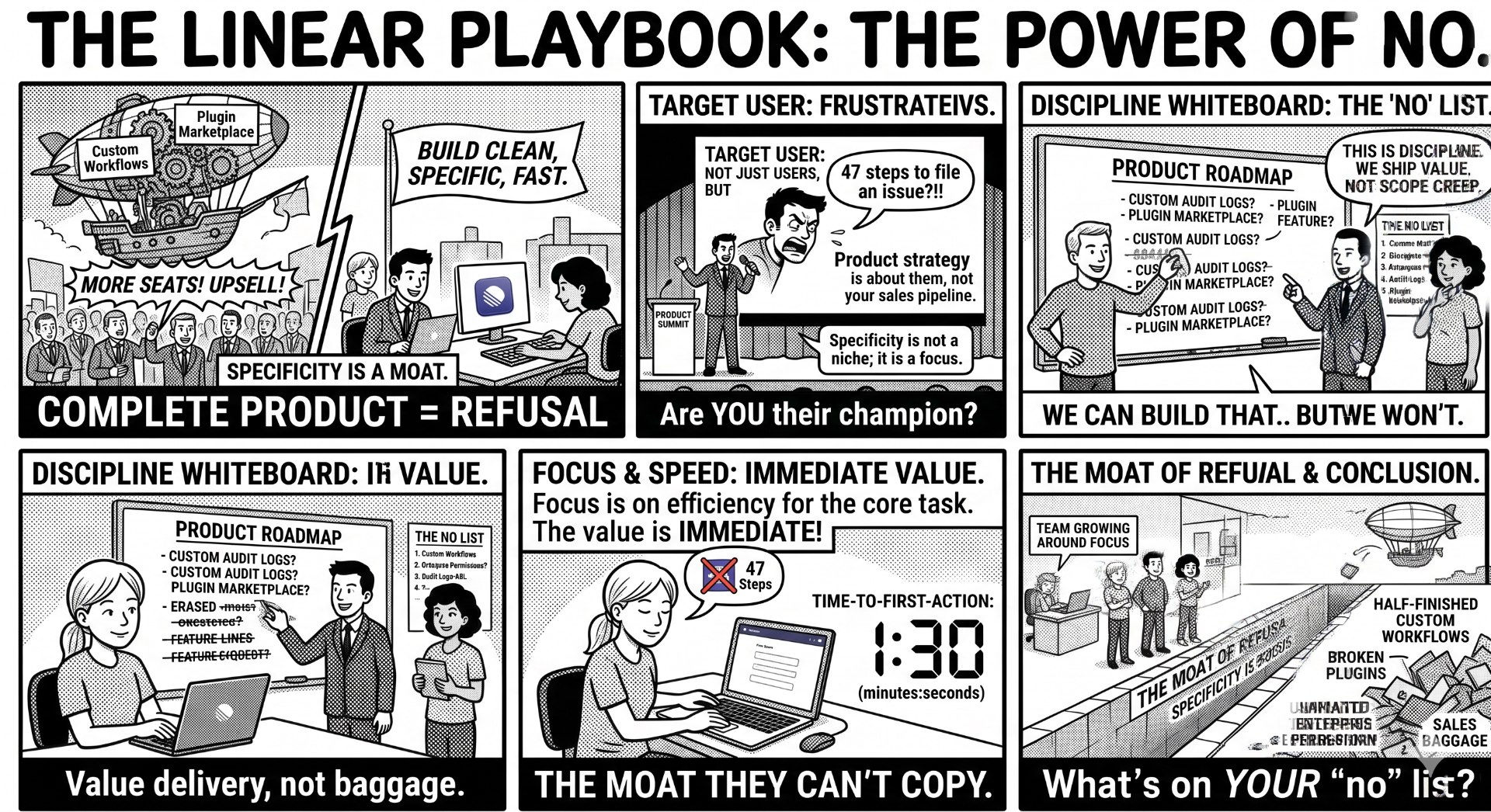
Linear beat Atlassian at its own game with three engineers.
Not because they had better code. Not because they raised more venture capital. Not because they had a 200-person enterprise sales team flying to Fortune 500 boardrooms. They won because they made the most specific product decision possible: they refused to build for everyone.
This is the insight most founders get wrong about product strategy. We talk about "moving fast" and "iterating" and "building what customers ask for." We celebrate founders who raise massive rounds and hire hundred-person teams. We measure success in market share, adoption rates, and total addressable market.
But the founders winning right now are doing something different. They're building moats not through scale, but through constraints.
The Pattern Nobody Admits
Here's what I keep seeing: the best products in every category started by being radically specific about who they serve.
Slack didn't target "teams that need communication tools." They targeted software teams at fast-growing companies who were already using Campfire (a IRC-like tool) and wanted something better. Figma didn't target "designers everywhere." They targeted product and UX designers who worked in teams and needed real-time collaboration. Linear didn't target "people who need issue tracking." They targeted engineers at high-growth startups who were genuinely angry about Jira.
Each of these companies started by identifying not a broad market, but a specific slice of a market: people who felt the pain most acutely, who were already self-selecting as power users, who would evangelize the product if it was 10x better for their specific workflow.
The pattern is unmistakable once you see it. But here's the thing: most founders see this pattern and still try to build for the broader market anyway. They say "we'll own this vertical first, then expand." Then they expand too early. They add features for the broader market. They dilute what made them special. And the magic dies.
Why "Expand Your TAM" Fails (And Why That's Good)
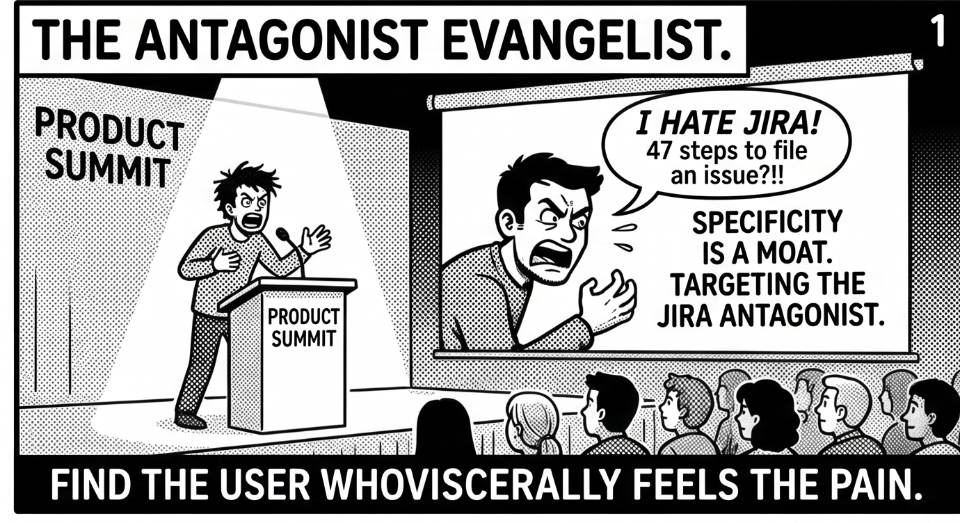
The instinct is to say: "The addressable market for issue trackers is huge. Why would we only target engineers? Why not build for product managers, executives, operations teams?"
The answer is economics. When you try to serve everyone, you serve no one exceptionally well.
Research on category winners shows a clear pattern: the first product to own a specific niche shows 3.5x higher retention than products trying to serve everyone from day one. A studied case found that when you pick a vertical and go deep, you create defensibility that pure feature parity can never match.
This is what Linear understood. They didn't say "we're building the best issue tracker." They said "we're building the best issue tracker for the engineer who would rather leave Jira than figure out another custom workflow."
That constraint, that refusal to please everyone, became their superpower.
The "No" List Is Your Architecture
Linear's first PRD was remarkable for a different reason than most people think.
It wasn't remarkable because of what they planned to build. It was remarkable because of what they planned to refuse to build.
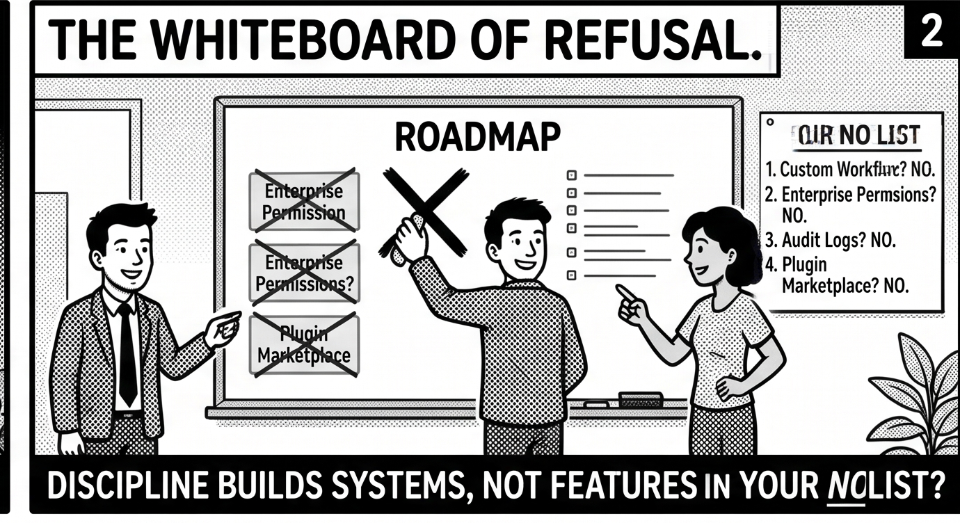
No custom workflows. No enterprise permission systems. No plugin marketplace. No audit logging for compliance teams. No SSO integrations. No user management screens. The list of things they would not ship went on for pages.
Most founders see this and think "incomplete product." I think the opposite. A "complete" product isn't one that has every feature. A complete product is one where every feature serves the core user's core workflow, and everything else gets cut.
"We could build that" is the most dangerous sentence in product strategy. It justifies scope creep disguised as opportunity. It's how good products become bloated products. It's how focused companies become unfocused.
Linear's constraint forced their entire engineering team to ask a single question with every feature request: "Does this serve the engineer who's insulted by Jira?" If the answer was no, it didn't ship. If the answer was no, they looked for another way.
That discipline built a system. Not a feature list, a system.
Why Constraints Create Moats
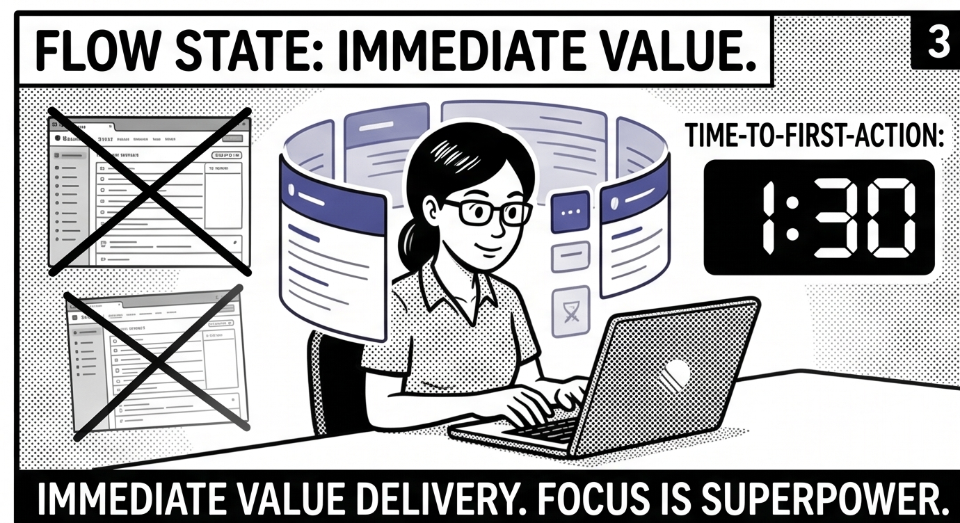
Here's the uncomfortable truth about moats in the AI era: they don't come from code.
Code is reproducible. Architecture is copyable. API design can be replicated. But the behavior of a system shaped by relentless constraint is almost impossible to replicate once you've diluted it.
Slack could have tried to serve IRC users, Slack users, and Teams users all equally. They didn't. They doubled down on product teams and made Slack indispensable for that use case. That behavioral lock in, the fact that every product team knew Slack intimately and had built workflows around it, became the moat.
Figma could have built for designers, developers, and stakeholders equally. They didn't. They owned design teams first. That domain specificity, the depth of knowledge about how designers work, became harder to compete against than any single feature.
Linear is following the same playbook. Engineers at fast-growing startups don't just use Linear. They've reorganized their entire workflow around it. The "no" list created the conditions for that organizational lock-in.
Your competitive advantage isn't the features you ship. It's the depth of knowledge about your specific user's workflow that your constraints force you to develop. It's the behavioral lock-in that comes from doing one thing obsessively well.
Building Your Own "No" List
This is where most teams get stuck. They understand the theory. They even believe it. But they don't know how to actually build a "no" list.
Start with this question: Who feels the pain most acutely?
Not "who might benefit." Not "who's part of the TAM." Who genuinely, viscerally feels the problem your product solves?
For Linear, that was the engineer who'd rather spend a Saturday rebuilding issue tracking from scratch than spend Monday configuring Jira. For Slack, it was the engineering team lead who had to manage distributed conversations across eight different channels. For Figma, it was the product designer working with a remote team across time zones.
Once you identify that person, everything else is constraint. Ask: "What would make this person's workflow 10x better?" Then build only that. Cut everything else. When someone asks for a feature that doesn't directly serve this user, write it down. Put it on your "no" list. This is your competitive advantage.
How Prodini Helps You Defend Constraints
This is why we built Prodini the way we did.
Most teams can name their "no" list. Fewer teams can actually defend it when the pressure comes. When a sales opportunity shows up, when an investor asks why you don't support a certain integration, when a customer begs for a custom workflow, the constraints erode.
Prodini keeps your decision context visible. Your "no" list isn't buried in old Confluence pages or lost in Slack threads. It lives in your product context, accessible every time someone proposes a feature that might violate it. The reasoning behind each constraint is visible. The data backing it up is there. The conversation about why you said no is preserved.
That's not a product feature. That's infrastructure for focus.
The Teams That Win Defend Their Constraints
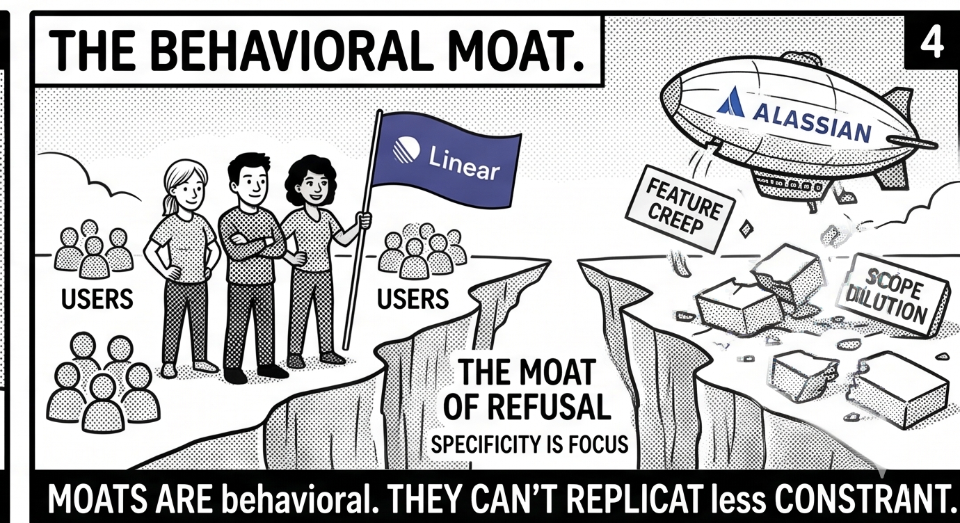
The most overlooked competitive advantage in product strategy is the willingness to say no, and to keep saying no, consistently, across the organization.
Linear didn't outbuild Atlassian. They out-refused them. Slack didn't out-engineer everyone with chat. They out-focused them. Figma didn't invent multiplayer design. They out-committed to it as their entire thesis.
The teams that build category winners are the ones whose "no" list gets read before every feature conversation. They're the ones who can articulate why they built their product the way they did, and who hold that line even when it hurts.
That's not an accident. That's a choice. And it's the most valuable choice you can make in product strategy.
What's on your "no" list right now?
If you've been thinking about this, I'd love to compare notes. Try Prodini or book a quick call to talk about how we're helping teams defend their constraints.